

Quick answer
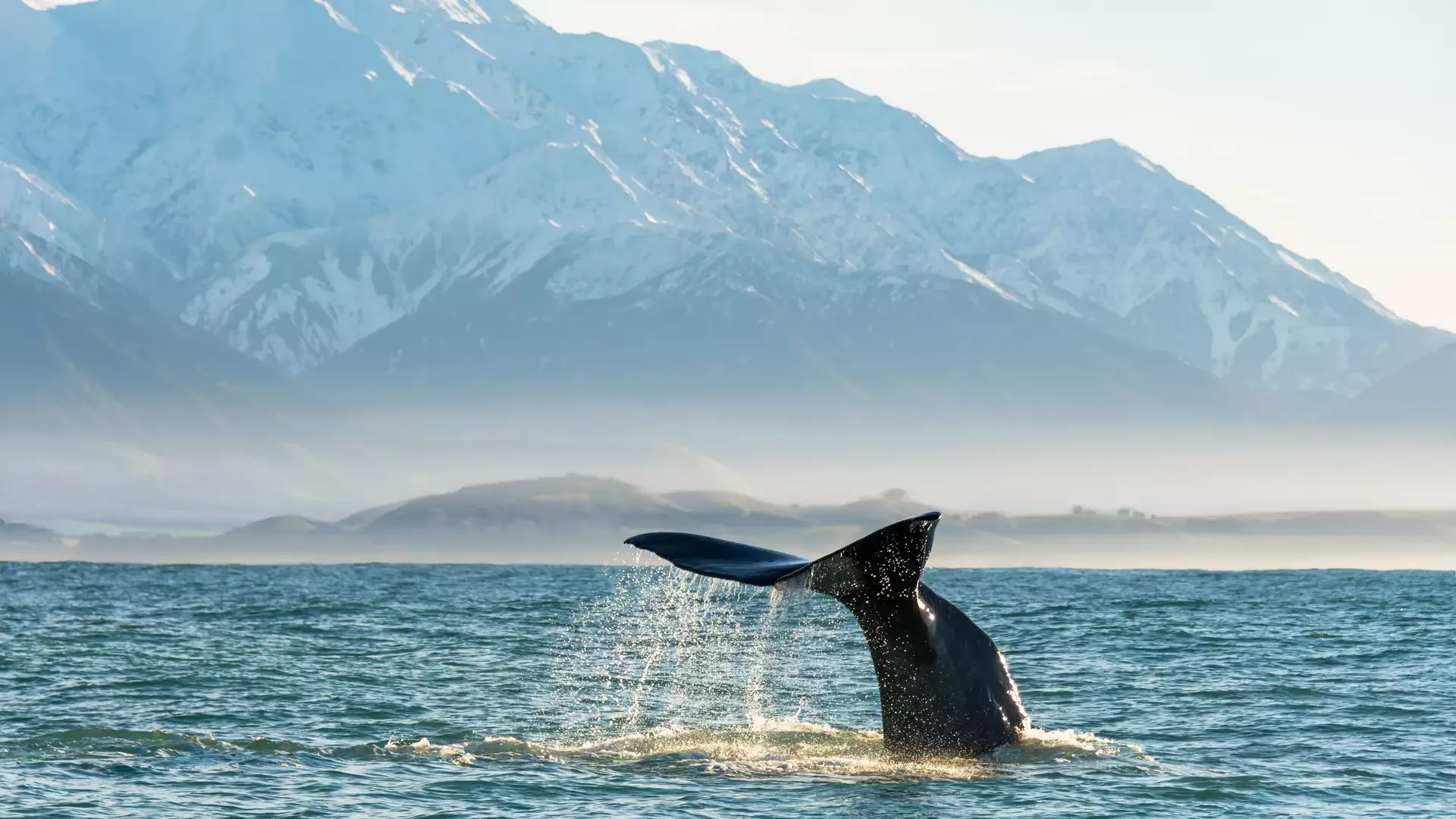
The kaikoura whale watching season operates year-round, with sperm whales present daily thanks to the 1,600-meter-deep Kaikōura Canyon that runs close to shore. Winter months (June through August) bring migrating humpback whales and southern right whales, while calmer sea conditions in summer and autumn (December through April) increase the likelihood of tour departures and sightings of dusky dolphins, orcas, and pilot whales alongside the resident sperm whale population.
The Kaikōura Canyon drops to abyssal depths less than a kilometre from shore, creating a nutrient upwelling that sustains one of the densest concentrations of marine life in the Southern Hemisphere. Sperm whales hunt giant squid in these cold, oxygen-rich waters throughout the calendar, surfacing to breathe in predictable cycles that have anchored the local whale-watching industry since 1987. Unlike migratory humpbacks or grey whales that pass through coastal corridors for weeks at a time, Kaikōura's male sperm whales are year-round residents, with individual animals identified and tracked across decades. Seasonal variation shapes the supporting cast rather than the headline species. Humpback whales migrate northward from Antarctic feeding grounds between June and August, often breaching and tail-slapping in displays visible from the tour vessels. Southern right whales appear sporadically during the same winter window, their calves born in sheltered bays further north before the families travel south. Dusky dolphins peak in summer, often riding bow waves in super-pods of several hundred animals, while orcas hunt stingrays along the coast during warmer months. The kaikoura whale watching season never closes because the sperm whales never leave, but the roster of secondary sightings expands and contracts with water temperature and prey availability. Sea conditions determine whether vessels can depart more than any wildlife calendar does. Southerly swells and strong winds during spring can ground tours for days, while the extended high-pressure systems of late summer and early autumn deliver the calmest water and clearest visibility. Morning departures benefit from lighter winds before the nor'wester builds each afternoon. Tours operate daily from 09:00 to 16:30, with earlier slots offering the steadiest seas and the highest probability of departure during marginal weather windows. The canyon's proximity means vessels reach whale habitat within fifteen minutes, but getting offshore at all depends on the swell wrapping around the Kaikōura Peninsula. Booking flexibility matters during shoulder seasons when weather can shift rapidly. Tours carry a 95 percent sighting success rate across the year, with refunds or rescheduling offered for cancellations, but winter visitors should plan buffer days around their whale-watching window to absorb potential weather delays.
“The canyon's proximity means vessels reach whale habitat within fifteen minutes, but getting offshore at all depends on the swell wrapping around the Kaikōura Peninsula.”
Understanding the Kaikoura Whale Watching Season
Kaikoura offers year-round whale watching due to the resident sperm whale population. While sightings occur throughout the year, seasonal shifts in migratory species and sea conditions influence the broader marine experience.
Summer (Dec–Feb)
High crowdsWarm (15°C–22°C), long daylight hours
Migratory species often pass through during these warmer months.
Autumn (Mar–May)
Moderate crowdsStable, mild (10°C–18°C)
Sea conditions are frequently favorable, providing consistent opportunities for sightings.
Winter (Jun–Aug)
Lower crowdsCooler (5°C–12°C), occasional swell
Increased chance of viewing migratory orcas or humpback whales.
Spring (Sep–Nov)
Moderate crowdsVariable (8°C–16°C), potential wind
Marine life remains active, though weather can be more changeable during this period.
Verdict: For a balance of stable sea conditions and consistent sightings, the shoulder seasons of April or October are often preferred.
Daily Opening Hours for Kaikoura Whale Watching Season Tours
Kaikoura Whale Watch operates on a consistent daily schedule throughout the season to facilitate tour departures. Please plan your visit to align with these set operating hours.
| Monday | 09:00–16:30 | |
|---|---|---|
| Tuesday | 09:00–16:30 | |
| Wednesday | 09:00–16:30 | |
| Thursday | 09:00–16:30 | |
| Friday | 09:00–16:30 | |
| Saturday | 09:00–16:30 | |
| Sunday | 09:00–16:30 |
Getting to the Whaleway Station During Kaikoura Whale Watching Season
The Whaleway Station is located at Whaleway Station Road, Kaikōura 7300. Visitors can reach the facility by following local signage toward the coast in Kaikōura.
State Highway 1 to Kaikōura
InterCity bus to Kaikōura
Coastal Pacific train to Kaikōura Station
Pre-Visit Checklist for Your Kaikoura Whale Watching Season Trip
Preparation ensures comfort and compliance for your whale watching tour.
-
Book your tour in advance — Tours operate year-round but spaces fill quickly, especially during peak season.
-
Bring warm, layered clothing and waterproof jacket — Sea conditions and wind can make conditions cold and wet on deck.
-
Consider motion sickness medication if prone — The vessel navigates open ocean swells that may affect sensitive passengers.
-
Arrive 30 minutes before your departure time — Check-in, safety briefings, and boarding require time before the scheduled tour.
-
Carry valid photo ID for all passengers — Identification is required during the check-in process.
-
Wear non-slip footwear with closed toes — Deck surfaces can be slippery and movement is required during the tour.
-
Pack sunglasses and sunscreen for sunny conditions — Glare off the water intensifies UV exposure even on cooler days.
Check availability
Frequently Asked Questions About Kaikoura Whale Watching Season
Everything you need to know about kaikoura whale watching season